 ">
">
A call for primary research in creationist cosmology
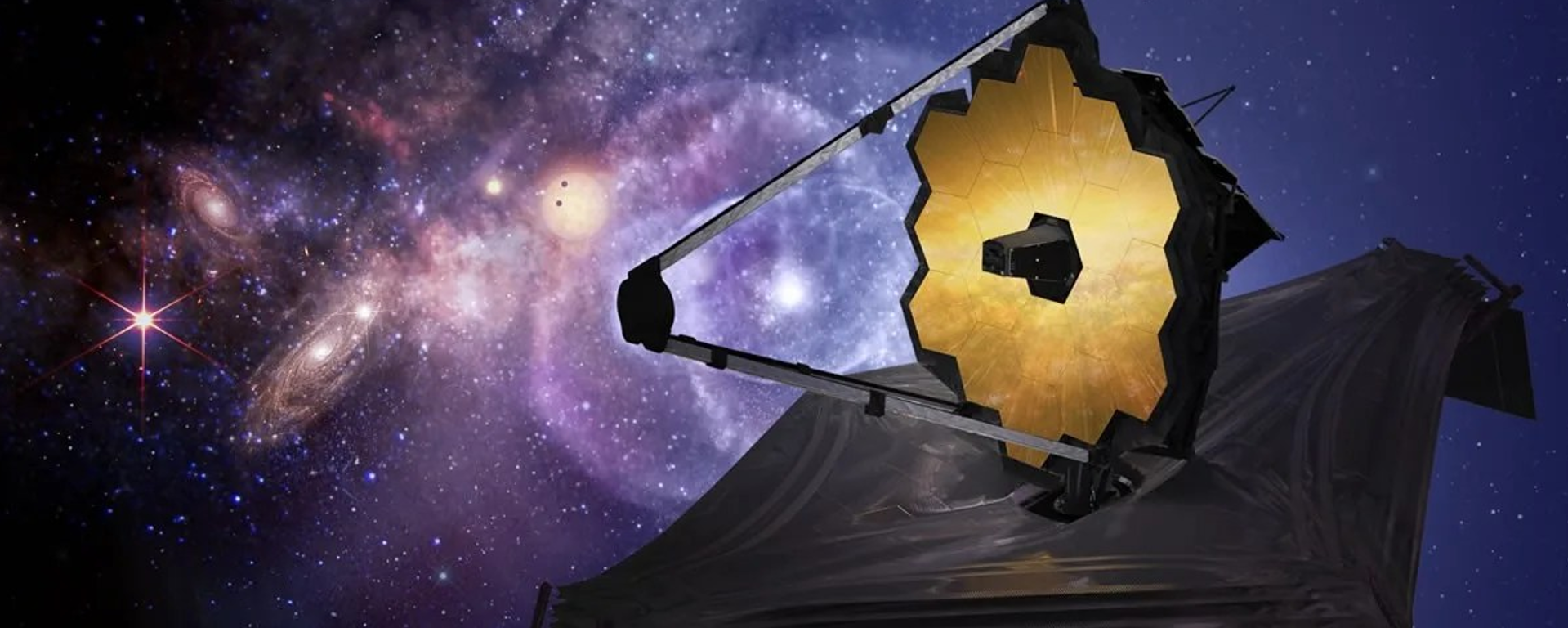
Since its launch on December 25, 2021, the James Webb Space Telescope (JWST) has collected an “astronomical” amount of data from the far reaches of the universe. For the Fall 2027 issue of the CRSQ we would like to highlight studies which analyze data from the JWST and other space missions/sky surveys through a recent-creation lens. More than just pretty pictures, these studies should focus on analyzing numerical data including:
- coordinates of objects
- shape and distribution of objects
- luminosity of objects
- spectral properties of objects
Make bold predictions based on a recent cosmology and see how they stand up to the data!
Manuscript submissions are due December 1, 2026
This special issue marks the beginning of a Cosmology Research Program aimed at addressing these questions. Contact us us if you're interesting in learning more about how to be involved in the Cosmology Research Program.
Objective
Use publicly available data from large-scale astronomical surveys and dedicated space missions (JWST, SDDS, WMAP, etc., see Sources appendix) to assess creationist models, discover evidence for structure and design, and formulate generally useful observations that would have otherwise remained hidden without the Creationist presupposition that the universe is young and designed.
Background
Creationist Cosmology research often prioritizes apologetics and critiques over primary research, missing opportunities to validate the Creationist presupposition through useful outcomes (Luke 6:44). Additionally, it's frequently conducted by individuals, despite Scripture suggesting collaboration is essential for understanding creation (1 Cor 13:9, Rom 1:20). The RATE project [1] exemplifies successful collaborative primary research, validating creationism regarding isotope decay rates. A similar collaborative effort is now needed for astronomical research.
Unlike creationist cosmology, “The cornerstone of modern [secular] cosmology is the belief that the place that we occupy in the Universe is in no way special. This is known as the cosmological principle.” [2]. The cosmological principle, by its very nature, assumes an absence of design and a designer. Consequently, modern cosmology has yielded little tangible progress, as evidenced by its predictions being consistently disproven by new observations, necessitating continuous revisions to the standard cosmological model. [3][4]
Recent research by Shamir [5][6] and others has challenged the cosmological principle through straightforward analysis of publicly available astronomical data. These findings are as significant as Schweitzer's [7] discovery of soft tissues in dinosaur fossils, which spurred Anderson [8] to initiate the iDINO creationist project. Shamir’s work is notable for both its conclusions and its methodology, demonstrating that even basic data analysis can reveal cosmic structures, even by those not actively seeking them. This suggests that creationist cosmologies, with a specific focus on identifying design, could be even more effective in uncovering structure and validating their hypotheses.
The abundance of publicly accessible observational data (See Appendix A) presents an opportunity for Creationist cosmologists to collaborate on primary research to devise predictive Cosmological models founded on the Creationist presupposition. We believe this work will bring about tangible fruit unlike the barrenness of secular cosmology.
Special thanks to Ticho Tenev and other CRS members for developing this proposal.
Appendix A
| Source Name | Category | Description | Resource Link |
|---|---|---|---|
| James Webb Space Telescope (JWST) | Deep Space | The premier infrared space observatory providing high-resolution images and spectra to study every phase of cosmic history, from first stars and galaxies to exoplanets and our own Solar System. | MAST JWST Archive |
| Hubble Space Telescope (HST) Archive (MAST) | Deep Space | Provides access to the massive collection of high-resolution imaging and spectroscopy from HST (UV, visible, and near-IR), essential for deep-field cosmology and high-redshift galaxy studies. | Mikulski Archive for Space Telescopes (MAST) |
| Sloan Digital Sky Survey (SDSS) | Deep Space | One of the most detailed ground-based surveys, providing deep multi-color images and spectra for millions of galaxies and quasars, vital for 3D mapping the Universe and cosmology. | Sloan Digital Sky Survey (SDSS) |
| Planck Satellite Archive | Deep Space | Contains the most precise full-sky maps of the Cosmic Microwave Background (CMB) temperature and polarization anisotropies, which are fundamental for constraining cosmological models. | Planck Legacy Archive (ESA) |
| Dark Energy Survey (DES) | Deep Space | An optical and near-infrared survey that mapped a large portion of the Southern Sky to study dark energy and the evolution of the Universe using four complementary probes (lensing, clusters, BAO, and supernovae). | Dark Energy Survey (DES) |
| NASA Planetary Data System (PDS) | Planetary | The principal, long-term archive for all digital data products returned from NASA's Solar System missions (e.g., Mars, Jupiter, asteroids). It is organized into discipline-specific nodes. | NASA Planetary Data System (PDS) |
| ESA Planetary Science Archive (PSA) | Planetary | The central repository for all scientific and engineering data returned by ESA's Solar System missions (e.g., Rosetta, Mars Express). It follows the same PDS standards for data compatibility. | ESA Planetary Science Archive (PSA) |
References
[1] Vardiman, Larry, et al. "Radioisotopes and the Age of the Earth." Proceedings of the International Conference on Creationism. Vol. 5. No. 1. 2003.
[2] Liddle, Andrew. An introduction to modern cosmology. John Wiley & Sons, 2015. page 1, paragraph 1.
[3] Abdalla, E., et al. (2022). "Cosmology Intertwined: A Review of the Tensions and Connections." Journal of High Energy Astrophysics, 34, 49–211.
[4] Peebles, Phillip James E. "Anomalies in physical cosmology." Annals of Physics 447 (2022): 169159.
[5] Shamir, Lior. "Large-scale patterns of galaxy spin rotation show cosmological-scale parity violation and multipoles." arXiv preprint arXiv:1912.05429 (2019).
[6] Shamir, Lior. "The distribution of galaxy rotation in JWST Advanced Deep Extragalactic Survey." Monthly Notices of the Royal Astronomical Society 538.1 (2025): 76-91.
[7] Schweitzer, Mary H., et al. "Soft-tissue vessels and cellular preservation in Tyrannosaurus rex." Science 307.5717 (2005): 1952-1955.
[8] Anderson, Kevin L. "The iDINO project." Creation Research Society Quarterly 51.4 (2015).